
Key Takeaways:
- Soft washing with biodegradable cleaners is the best way to clean a tile roof in Florida.
- Concrete tile roof maintenance includes treating for mold, algae, and surface wear.
- Regular inspections and coatings extend tile roof lifespan up to 50+ years.
- Avoid pressure washing — it’s damaging and can shorten roof life significantly.
Florida is a wonderful place to live, but its intense humidity, frequent rainfall, and pervasive salt air create a unique challenge for homeowners. For your roof, this environment means mold, mildew, and black algae are an inevitable reality.
If you’re wondering how to clean a tile roof in Florida properly, the answer is with specialized care and expertise. Neglecting this maintenance can negatively impact your home’s curb appeal and shorten your roof’s service life.
As a trusted expert in tile systems across the state, Cathedral Roofing Innovations understands the specific demands of these high-performance materials and is here to guide you through the best practices for cleaning and maintenance.
The Different Types of Tile Roof Materials
Tile roofs are a significant investment known for their durability and aesthetic appeal. In Florida, three main types are common:
1. Concrete Tiles: Highly durable but porous, making them susceptible to moisture absorption and algae growth if not maintained. Concrete tile roof maintenance in Florida often involves specific antifungal treatments.
2. Clay Tiles: Known for their natural beauty and excellent color retention. They are generally less porous than concrete but still require cleaning to remove surface growth.
3. Ceramic Tiles: Fired at high temperatures, these are the least porous. They offer superior resistance to organic growth, though they still require routine cleaning.
The material of your tile directly impacts the required cleaning method and overall long-term durability. Cathedral assesses your specific tile type to ensure the maintenance plan is effective and safe.
Safe Cleaning Practices
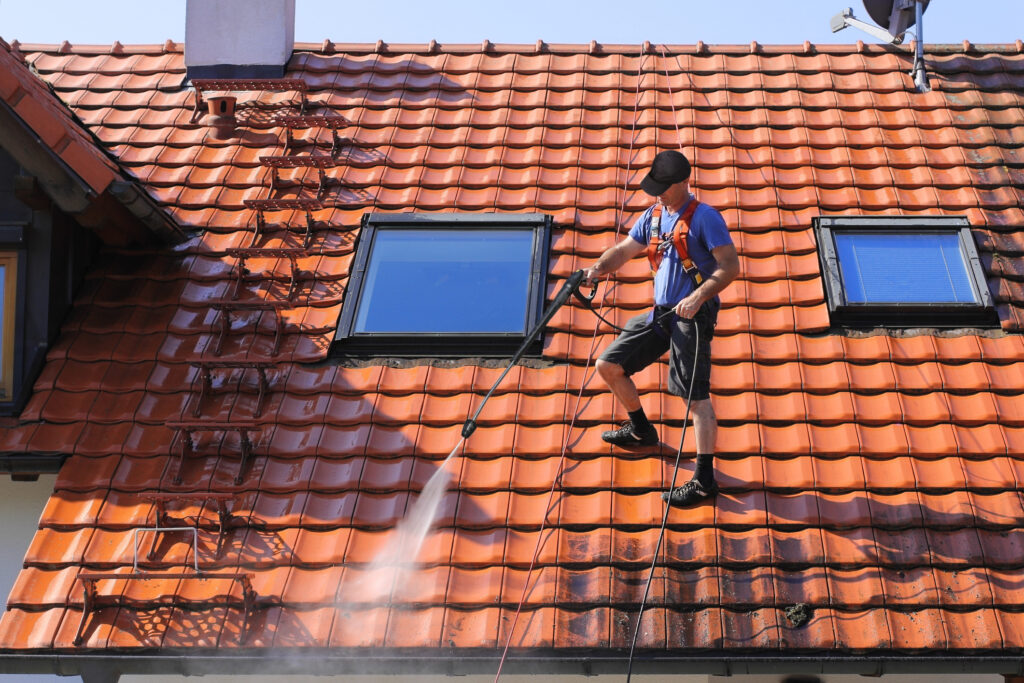
The temptation for many homeowners with a dirty roof is often to rent a machine and pressure wash the grime away. Yet, this is one of the most damaging mistakes you can make for a tile roof.
High-pressure water can erode the surface of concrete tiles, strip the color and protective granules from the tile, and force water beneath the tiles and into the underlayment, ultimately compromising your roof’s primary water barrier.
The best way to clean a tile roof in Florida is through soft washing. This recommended approach involves:
- Low-Pressure Application: Applying a cleaning solution at pressures comparable to a garden hose.
- Biodegradable Detergents: Using professional-grade, specialized, and environmentally friendly cleaning agents, often with a chlorine base (sodium hypochlorite) mixed with an anti-fungal agent, to kill the organic growth at its root.
- Rinse and Treat: Allowing the solution time to work, followed by a gentle, low-pressure rinse.
These methods kill the mold and algae without damaging the tile surface or forcing water where it shouldn’t go, assuring a lasting clean and preventing collateral damage. When in doubt, always hire professional services with experience in tile roof systems like Cathedral Roofing Innovations.
3 Steps to Maintain Your Roof
Proactive tile roof maintenance in Florida is the key to preventing minor issues from becoming costly repairs. Here’s how to maintain your roof’s longevity in this environment:
1. Keep a Consistent Cleaning Schedule
In Florida’s aggressive climate, most tile roofs benefit from a professional soft wash every 1-3 years, depending on proximity to water and tree cover.
2. Perform Inspections Frequently
We recommend annual professional inspections. However, if your home is subject to severe weather (like a hurricane) or is directly on the coast, a biannual inspection is warranted. These checks go beyond surface dirt to assess structural integrity.
3. Consider Sealing and Coating
Specialized coatings can be applied to concrete tiles after a deep cleaning to help reduce porosity, protect the color, and slow down future organic growth. While not always necessary, these protective measures can significantly contribute to the roof’s durability.
Common Tile Roof Problems (and How to Avoid Them)
While tile is resilient, roof-walking without proper training, as well as the climate, can lead to specific problems:
- Cracked Tiles: Caused by impact, foot traffic, or shifting structural components. A cracked tile is not an immediate leak point if the underlayment is sound, but it must be replaced to protect the membrane underneath.
- Slipped or Displaced Tiles: These often occur after severe wind events. If a tile is displaced, the protective overlap is lost, making the area vulnerable to water intrusion.
- Underlayment Wear: The underlayment is the true waterproof barrier. While tiles can last decades, the underlayment often has a shorter life. Early detection of underlayment wear through professional maintenance programs is crucial for preventive replacement, saving you from a full re-roofing down the line.
Early detection through Cathedral’s routine maintenance programs and inspections assures quick, targeted repairs, keeping your system watertight and maximizing its performance.

Maximize Your Investment Today With Cathedral
One of the most attractive features of a tile roof is its longevity. The average lifespan of a tile roof can range up to 50 years or even longer when properly maintained.
Routine maintenance, including professional cleaning and timely repairs, allows you to reach the upper end of that longevity range. By partnering with Cathedral Roofing Innovations, you are protecting your home’s value, curb appeal, and structural integrity for generations.
Don’t wait for black streaks to ruin your home’s appearance or for a leak to reveal structural damage. Let our tile system experts make sure your roof is protected, clean, and performing optimally against Florida’s elements.
 Call Now