
Key Takeaways:
- Roof age in Florida is a top factor: Shingles often fail at 15–25 years; tile/metal last longer but underlayment doesn’t.
- Replace if issues are widespread (granule loss, warped shingles, attic daylight, heavy algae).
- Repair makes sense for isolated problems like flashing leaks, unless underlayment or decking is compromised.
- Cape Coral storm damage can loosen shingles roof‑wide, often pushing insurance and pros toward replacement.
For those of us living in Southwest Florida, worrying about the roof is just a fact of life. When you spot a leak or a missing shingle, a stressful question hits: Do I just patch it up, or am I looking at a massive bill for a full replacement?
It’s easy to feel pressured or confused. At Cathedral Roofing Innovations, we want to cut through the noise. Our mission isn’t to upsell you. It’s to give you the honest truth about your roof’s condition. When you’re dealing with roofing repair and replacement in Florida, clarity is everything. We’ll show you the practical differences between a temporary fix and a permanent solution.
Understanding Roof Age and Material Lifespan
Think of your roof’s age as its service record. In the intense Florida sun, humidity, and constant wind, materials simply don’t last as long as they might up north. Age is the strongest indicator that replacement may be approaching.
- Asphalt Shingles: Even the best shingles in our climate typically give you 15 to 25 reliable years. Once they hit that 18-20 year mark, the materials are becoming brittle and patches are just temporary Band-Aids.
- Tile and Metal: These materials offer superior durability, often lasting 40+ years. However, the waterproof membrane underneath the tiles is the weak link, and it usually needs a full replacement after 20-25 years.
If your roof is already running on borrowed time, a repair might be throwing good money after bad.
Your Homeowner’s Visual Checklist
You don’t need to be a roofer to spot the major issues. Learning how to tell if a roof needs to be replaced starts with a simple look around your property:
- Gutters Full of Grit: Shingles protect themselves with a top layer of mineral granules. If you see piles of these granules in your gutters or downspouts, your shingles are losing their sun protection and are rapidly nearing failure.
- Warped Shingles: Look for shingles that are buckling, curling, or clawing (lifting at the corners). This means they are saturated and deteriorating.
- Widespread Moss or Algae: While common in Florida, heavy growth can trap moisture and accelerate the breakdown of the protective layers.
- Visible Light in the Attic: If you can see daylight peeking through the decking in your attic, you have a structural problem that a small repair cannot fix.
Why Professional Inspections Are Essential
Most homeowners focus on what they can see, but the real threats lurk beneath the surface. This is the difference between knowing when to repair roof damage instead of replacing it.
A small leak may just require a simple flashing repair. But if that leak is coming from water that has been saturating the underlayment (the synthetic or felt material underneath your shingles), the issue is widespread.
- Underlayment Failure: The underlayment is the true waterproof barrier. After decades in the heat, it becomes brittle and cracks, allowing water to wick across a large area.
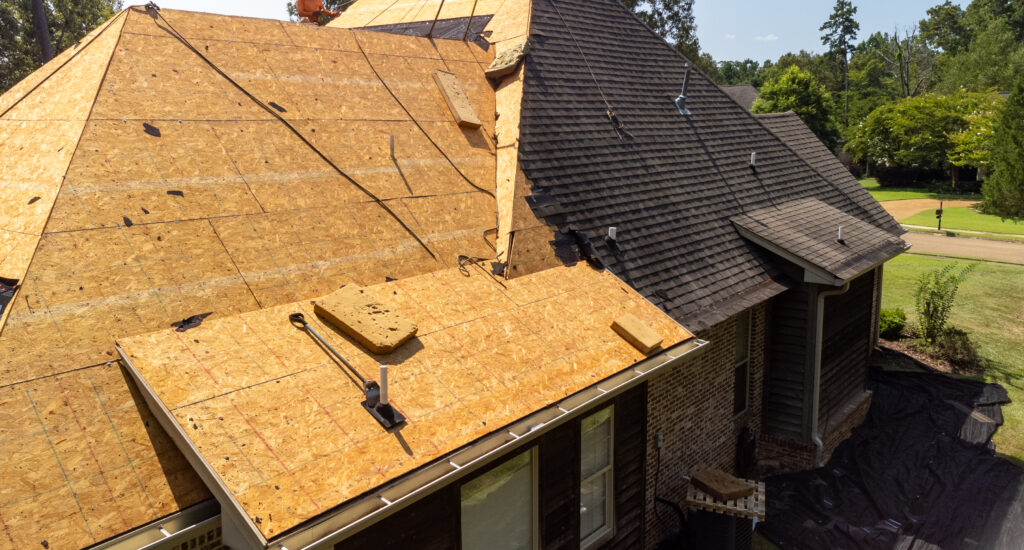
- Deck Rot: Unseen water damage can soften and rot the wooden roof deck. If multiple sections of decking are spongy or compromised, you need more than a repair; you need to restore the structural integrity of your entire roof system.
That’s why a comprehensive, hands-on inspection by a professional is non-negotiable for an accurate diagnosis.

Deciding When to Repair or Replace a Roof
It always comes down to the dollars, but look beyond the initial price tag. Ask yourself: Am I buying a solution, or am I buying time?
- The Repair Trap: If your roof is old and failing in multiple spots, repeated small repairs can cost you thousands over a few years, essentially paying for half a new roof without the benefit of a warranty or added property value.
- Replacement ROI: A full replacement is a significant investment, but it comes with a 20+ year manufacturer and labor warranty, improved energy efficiency, and a guaranteed increase in your home’s resale value.
Cathedral makes sures every quote is fully transparent. We show you the cost of a temporary repair versus the long-term return on investment of a replacement, so you can decide with confidence and no hidden fees.
Storm Damage Roofing in Cape Coral and Surrounding Neighborhoods
We know that storm damage roofing in Cape Coral and surrounding coastal areas often forces the decision. High winds and flying debris cause damage that goes beyond a simple fix.
Even if you don’t see obvious holes, high winds can lift and loosen the seals on shingles across the entire roof, creating a “domino effect” of eventual leaks. If the damage is significant, especially after a named storm, your insurance carrier may determine that repairing isolated sections is impractical.
Cathedral specializes in storm restoration. We will conduct a meticulous inspection, clearly document all damage for your adjuster, and help you navigate the entire insurance claim process to get the coverage you deserve.
Ready to Take the Next Step?
Choosing between a roof repair and replacement is a major financial and safety decision for your home. You deserve a partner who prioritizes your long-term security over a quick profit. Cathedral Roofing Innovations is committed to honest recommendations, superior materials, and impeccable craftsmanship.
Don’t guess and risk thousands in secondary water damage. Let the experts take an honest look.
Contact Cathedral Roofing Innovations today to request a free quote. We’ll give you the transparent facts you need to confidently decide whether repair or replacement is the right step for your home.
 Call Now